Corpus Christi Blog
Living Water
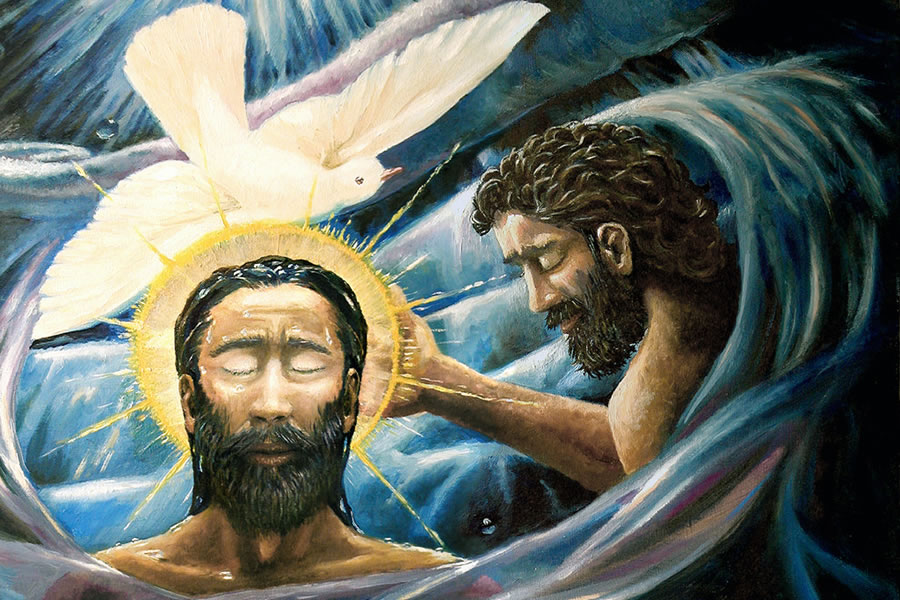
01-11-2026Weekly ReflectionJen Arnold, M.A.The Feast of the Baptism of the Lord highlights Baptism’s foundational role in the Christian life as the Sacrament of Initiation into the Church and a sign of new birth in Christ. “The Lord himself affirms that Baptism is necessary for salvation. He also commands his disciples to proclaim the Gospel to all nations and to baptize them” (CCC 1257). The purpose of Jesus’ own baptism in the Jordan River, administered by his cousin, John, was to mark the beginning of his public ministry, to reveal the Blessed Trinity, to show solidarity with us sinners by providing an example of baptism, and to sanctify the waters of baptism. By entering the waters, Jesus consecrates them as a sacramental sign, making the water capable of conferring grace and thus enabling the person to be born into new life. God could have chosen the Sacrament of Baptism to be conferred in any number of ways, but his choice of water is most fitting in light of the context of all of salvation history.
Water has been a significant feature throughout salvation history in Scripture. As you read the Bible, water is a recurring motif woven into stories from Genesis through Revelation. God has consistently and actively used water as a vehicle for providing his grace, judgment, purification, renewal, and order. All this imagery prefigures the Sacrament of Baptism as the fountain of new life in the Holy Spirit. Let’s look at some examples of how God has used water to reveal himself, his will, his power, and his majesty.
“In the beginning, God created the heavens and the earth. The earth was without form and void, and darkness was over the face of the deep. And the Spirit of God was hovering over the face of the waters” (Gen 1:1). Water was present from the beginning, but it was essentially a formless abyss. On the second and third days of creation, God provided more structure to the waters, making them more like what we recognize on earth today. Then, on the fifth day, God created all the sea creatures and other water creatures. God also placed a river flowing out of Eden “to water the garden, and there it divided and became four rivers” (Gen 2:10). The story of creation shows us how God took shapeless, abstract waters and, by his word alone, made them life-giving and life-sustaining.
The Great Flood is God’s next significant use of water for divine revelation. At some point in time, the earth was so dreadfully full of wickedness and corruption that God decided to destroy all its inhabitants with a flood. Finding Noah to be a righteous man, God instructed him to build an ark and provided a means of salvation from the flood for him and his family. In this instance, the flood waters symbolize several things. Firstly, these waters represent God’s divine judgment. He has no tolerance for the sin in the world, so he uses devastating floodwaters to destroy it. However, the water also symbolizes purification as it recedes and reveals a new, clean earth, ready to begin again. The water also provides safety for the righteous as it buoys up the ark. Baptism is prefigured here — the waters of baptism wash away sin, and what emerges is a new life in Christ. God’s newly adopted child is then raised by baptism’s grace to a new covenant with God.
Moving on to Exodus, Moses was first saved from Pharoah’s wrath by being placed in and then retrieved from a basket floating in the waters of a river. Then, when Moses is grown, God calls him to free the Israelites from slavery. As they flee Pharaoh and his army, they encounter the Red Sea, a massive barrier to their escape, to say the least. However, it was through their faith in God that the Israelites were able to overcome this barrier. God split the Red Sea in two, allowing them to cross to the other side and obtain their freedom. While in pursuit, the Egyptians were then crushed and drowned as the sea closed behind the Israelites. God delivered his people from the bondage of slavery and crushed their oppressors through water, just as he delivers us from the bondage of the slavery of sin and crushes it through the waters of baptism. If we have the same faith as the Israelites, God can help us overcome any barrier that keeps us enslaved to sin; he will open up a way for us to find freedom.
Now, let’s look at just a few examples of what the prophets had to say about water as a symbol of interior renewal and abundance. In a hymn of praise and thanksgiving, Isaiah sings, “With joy you will draw water from the wells of salvation” (Is 12:3). Here, Isaiah directly links his salvation to water. During the Babylonian exile, a time of despair for the people of Judah, Ezekiel found a moment of hope saying, “I will sprinkle clean water on you, and you shall be clean from all your uncleanness, and from your idols I shall cleanse you” (Ez 36:25). This verse recognizes God’s actions in cleansing and sanctifying his people. Ezekiel has no reason to doubt that God will continue to be faithful in that activity. Zechariah 14:8 speaks of “living waters” flowing from Jerusalem, dividing to heal the seas, symbolizing the Messiah’s universal salvation. Again, these waters, as the waters of baptism, sanctified by Jesus’ own baptism, are life-giving.
Water appears several times in the New Testament as well, which I don’t have the space for here, but I cannot conclude without the culmination of water’s symbolism in Scripture. The Book of Revelation is an apocalyptic vision that concludes salvation history with the victory of God over evil, unveiling the divine mysteries and revealing our eternal worship in heaven. The last chapter of Revelation depicts “a river of the water of life, bright as crystal, flowing from the throne of God and of the Lamb,” nourishing the tree of life for healing the nations (Rev 22:1-2). As the chaos and disorder of this current world come to an end, the river of life provides healing, freeing us from death and sin. The river is flowing directly from the throne of God, symbolizing that he is the source of life, grace, sanctification, and salvation. Water, having done its part throughout salvation history, will be crystal clear in heaven and play a role in our eternal communion with the Triune God.
God doesn’t do anything by happenstance. Everything is meticulously designed and communicated. Baptism is necessary for our salvation, and we are to be baptized with water. He has been showing us the way from the beginning, and it will be revealed in its fullness in the end. Reflect on the aspects of water and how God has used them for humanity’s benefit, ordered toward salvation. Reflect on the Sacrament of Baptism and the effect it has on our souls. You can read and meditate on paragraphs 1257-1277 of the Catechism of the Catholic Church to help deepen your understanding of the sacrament. Notice the various sources of water around you and be thankful that each has principles of God’s perfect living water within them.
BACK TO LIST