Corpus Christi Blog
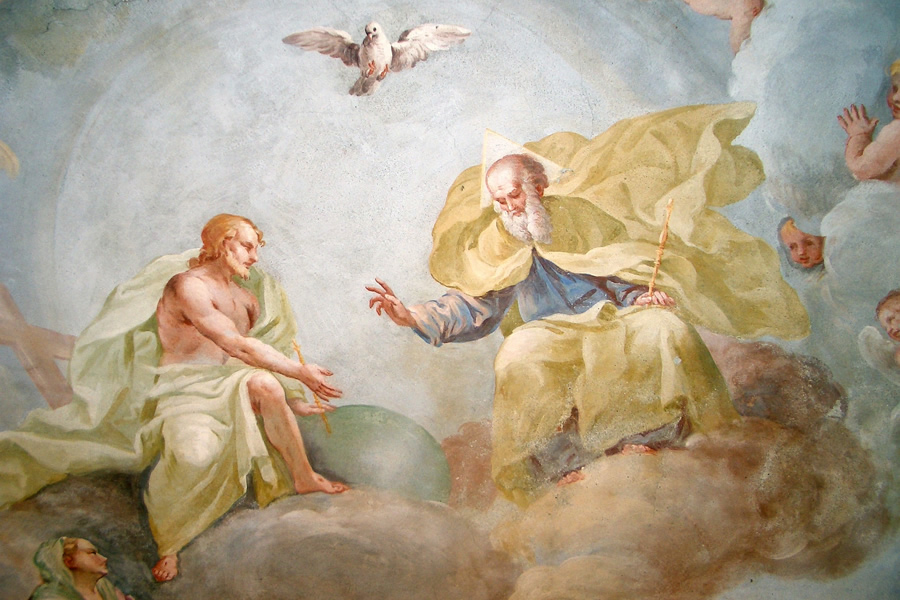
A Taste of Heaven – Union with the Trinity through the Eucharist
05-31-2026Weekly ReflectionJen Arnold, M.A.Today is a day the Church has set aside to contemplate the mystery of the Holy Trinity, which is “the central mystery of Christian faith and life. It is the mystery of God himself. It is, therefore, the source of all the other mysteries of faith, the light that enlightens them” (CCC #234). Since “God put us in the world to know, to love, and to serve him, and so to come to paradise,” we necessarily must be in relationship with the Triune God if we hope to enter the eternal beatific vision in heaven at the end of our earthly life, where we will know him to our fullest potential (CCC #1721). With the Holy Trinity as the central mystery of our faith, anything we believe or celebrate as Catholics finds its origin of truth there and thus helps to facilitate our relationship with all three Persons of the Triune God. With that in mind, let’s look more specifically at how the sacrament of the Eucharist leads us more deeply into relationship with the Blessed Trinity.
READ MORE
Proclaim the Gospel Through Word and Witness
05-24-2026Weekly ReflectionJen Arnold, M.A.On the first Pentecost, the Holy Spirit descended upon the Apostles, enabling them to proclaim the Gospel in various languages so the crowds could understand. As a result, 3,000 people were converted to Christianity on that day alone. This was the first act of a process called evangelization, in which, inspired and empowered by the Holy Spirit, individual members of the Church proclaim the core message of salvation through Jesus Christ, resulting in the conversion of more souls who then go out and continue to evangelize others. Evangelization is considered the fundamental mission of the Catholic Church because its goal is to guide all souls to heaven; therefore, it is the responsibility of every baptized Catholic to participate in this mission.
READ MORE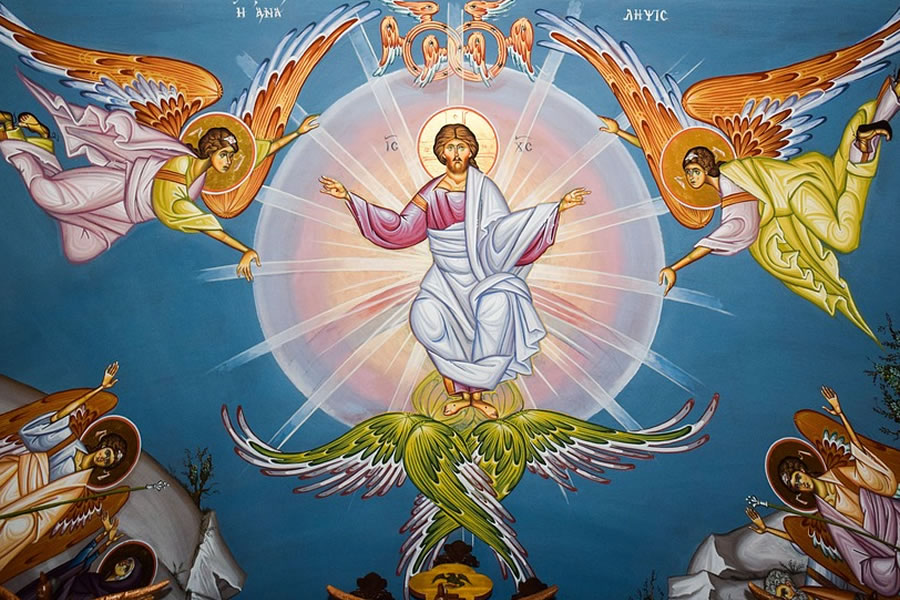
Lifted Up in Glory
05-17-2026Weekly ReflectionJen Arnold, M.A.The Solemnity of the Ascension of the Lord is the Church’s celebration of the Messiah’s enthronement at the right hand of the Father 40 days after his Resurrection. This event marks the entrance of Jesus’ glorified humanity into the divine heavenly kingdom, making the way for us. Because Jesus’ humanity necessarily included a physical body, his ascension also had to occur physically. The Apostles were given the great honor of witnessing the Lord’s ascension. “And when he had said these things, as they were looking on, he was lifted up, and a cloud took him out of their sight” (Acts 1:9). The Apostles are then told that, when Jesus returns at his Second Coming, he “will come in the same way as you saw him go into heaven” — on a cloud (Acts 1:11).
READ MORE
Catholic Social Teaching
05-10-2026Weekly ReflectionJen Arnold, M.A.There is no question that we live in a world marked by division, injustice, and uncertainty. We’re faced with many problems and even more questions about how to solve those problems. Conversations about issues such as immigration, education, mental health, economics, healthcare, climate, and many more are hotly and contentiously debated, sometimes fracturing relationships. As Catholics, we look to our Holy Mother Church for guidance in addressing the moral issues of our times.
READ MORE
How Can We Be Grateful for Our Suffering?
05-03-2026Weekly ReflectionJen Arnold, M.A.In the mystery of human existence, suffering stands as one of the most profound and universal experiences. None of us can or will escape it in our lifetimes. For Catholics, however, suffering is never meaningless, nor should it be cause for despair, because it finds its meaning in the cross. When we unite our suffering to the Passion of our Lord Jesus Christ, who willingly embraced his own profound suffering for our redemption, our own trials become a participation in his salvific work. Through the lens of faith, our suffering is an invitation to a deeper communion with God. This concept is what we refer to as redemptive suffering. (You can find more about redemptive suffering on my website.)
READ MORE