Corpus Christi Blog
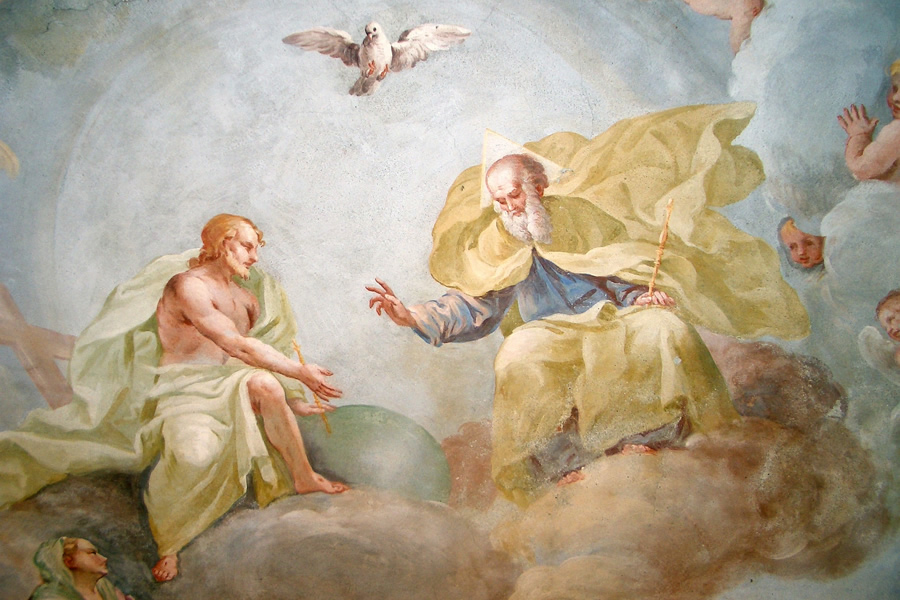
A Taste of Heaven – Union with the Trinity through the Eucharist
05-31-2026Weekly ReflectionJen Arnold, M.A.Today is a day the Church has set aside to contemplate the mystery of the Holy Trinity, which is “the central mystery of Christian faith and life. It is the mystery of God himself. It is, therefore, the source of all the other mysteries of faith, the light that enlightens them” (CCC #234). Since “God put us in the world to know, to love, and to serve him, and so to come to paradise,” we necessarily must be in relationship with the Triune God if we hope to enter the eternal beatific vision in heaven at the end of our earthly life, where we will know him to our fullest potential (CCC #1721). With the Holy Trinity as the central mystery of our faith, anything we believe or celebrate as Catholics finds its origin of truth there and thus helps to facilitate our relationship with all three Persons of the Triune God. With that in mind, let’s look more specifically at how the sacrament of the Eucharist leads us more deeply into relationship with the Blessed Trinity.
READ MORE
Proclaim the Gospel Through Word and Witness
05-24-2026Weekly ReflectionJen Arnold, M.A.On the first Pentecost, the Holy Spirit descended upon the Apostles, enabling them to proclaim the Gospel in various languages so the crowds could understand. As a result, 3,000 people were converted to Christianity on that day alone. This was the first act of a process called evangelization, in which, inspired and empowered by the Holy Spirit, individual members of the Church proclaim the core message of salvation through Jesus Christ, resulting in the conversion of more souls who then go out and continue to evangelize others. Evangelization is considered the fundamental mission of the Catholic Church because its goal is to guide all souls to heaven; therefore, it is the responsibility of every baptized Catholic to participate in this mission.
READ MORE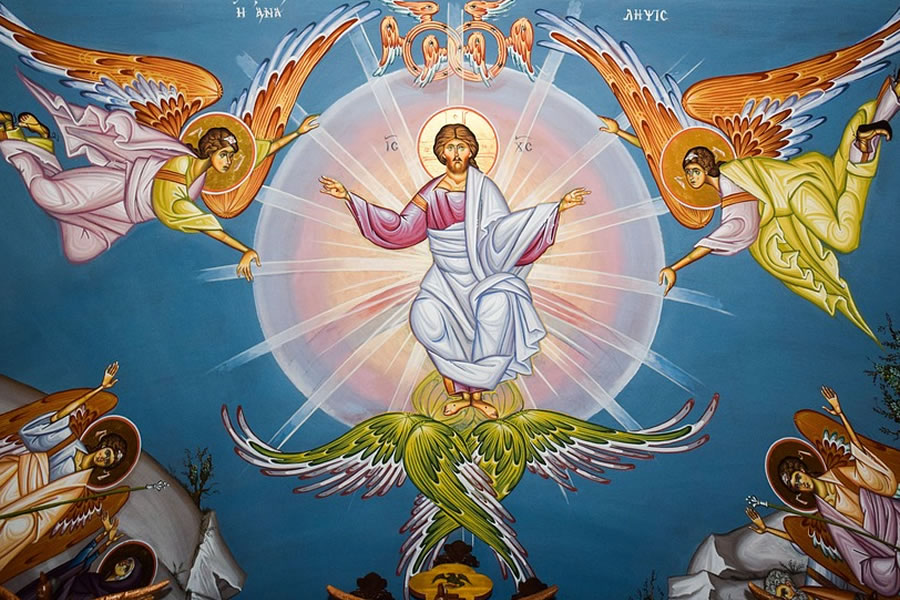
Lifted Up in Glory
05-17-2026Weekly ReflectionJen Arnold, M.A.The Solemnity of the Ascension of the Lord is the Church’s celebration of the Messiah’s enthronement at the right hand of the Father 40 days after his Resurrection. This event marks the entrance of Jesus’ glorified humanity into the divine heavenly kingdom, making the way for us. Because Jesus’ humanity necessarily included a physical body, his ascension also had to occur physically. The Apostles were given the great honor of witnessing the Lord’s ascension. “And when he had said these things, as they were looking on, he was lifted up, and a cloud took him out of their sight” (Acts 1:9). The Apostles are then told that, when Jesus returns at his Second Coming, he “will come in the same way as you saw him go into heaven” — on a cloud (Acts 1:11).
READ MORE
Catholic Social Teaching
05-10-2026Weekly ReflectionJen Arnold, M.A.There is no question that we live in a world marked by division, injustice, and uncertainty. We’re faced with many problems and even more questions about how to solve those problems. Conversations about issues such as immigration, education, mental health, economics, healthcare, climate, and many more are hotly and contentiously debated, sometimes fracturing relationships. As Catholics, we look to our Holy Mother Church for guidance in addressing the moral issues of our times.
READ MORE
How Can We Be Grateful for Our Suffering?
05-03-2026Weekly ReflectionJen Arnold, M.A.In the mystery of human existence, suffering stands as one of the most profound and universal experiences. None of us can or will escape it in our lifetimes. For Catholics, however, suffering is never meaningless, nor should it be cause for despair, because it finds its meaning in the cross. When we unite our suffering to the Passion of our Lord Jesus Christ, who willingly embraced his own profound suffering for our redemption, our own trials become a participation in his salvific work. Through the lens of faith, our suffering is an invitation to a deeper communion with God. This concept is what we refer to as redemptive suffering. (You can find more about redemptive suffering on my website.)
READ MORE
The Good Shepherd
04-26-2026Weekly ReflectionJen Arnold, M.A.On this Good Shepherd Sunday, our Gospel reading offers an image of Jesus for us to contemplate. We, the Church, are a flock of sheep, and Jesus is our Good Shepherd, whom we follow with complete trust. Before Jesus came, the Old Testament prefigured the Savior as a shepherd: “The LORD is my shepherd; there is nothing I lack. In green pastures he makes me lie down; to still waters he leads me; he restores my soul” (Ps 23:1-3). This is a rather peaceful description of our expected shepherd and the pasture in which he will watch over us.
READ MORE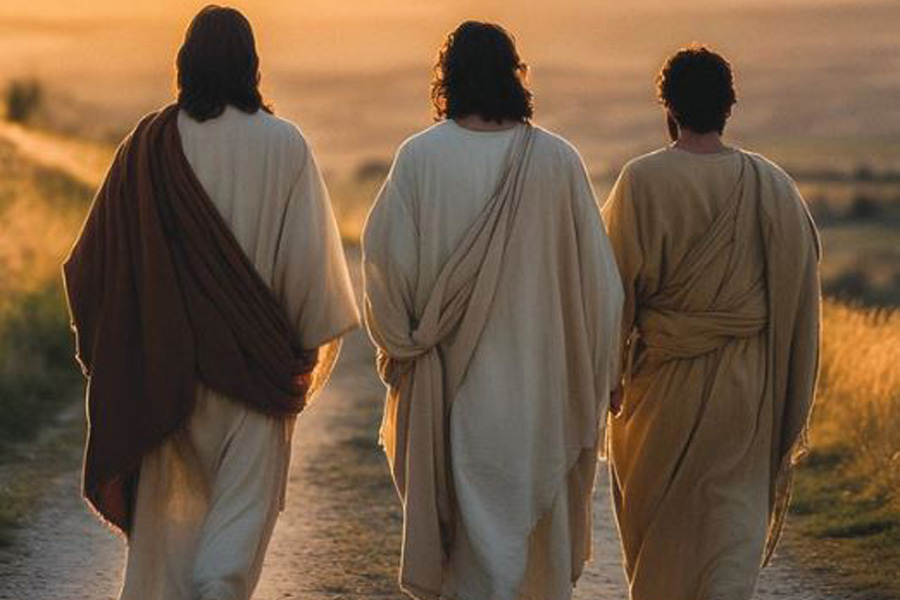
The Gift of Friendship
04-19-2026Weekly ReflectionJen Arnold, M.A.One of God’s most precious gifts to humanity is the gift of friendship. Friendship enables us to form intimate relationships with one another – outside of the unique friendship of marriage – that allow us to experience a reflection of divine love. When Jesus says to his disciples, “No longer do I call you servants…but I have called you friends,” friendship took on a new meaning as part of our pathway to holiness (Jn 15:15). Our great Catholic saints and theologians prized true friendship above earthly treasure and taught that authentic friendship is not an accidental circumstance, but an opportunity for a grace-filled relationship rooted in mutual pursuit of the good.
READ MORE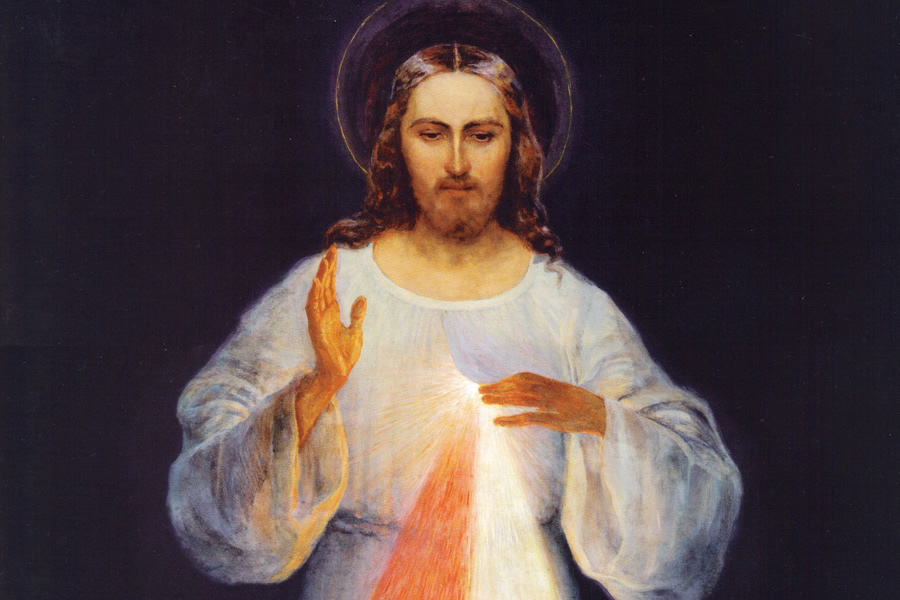
Unfathomable Mercy
04-12-2026Weekly ReflectionJen Arnold, M.A.On this Divine Mercy Sunday, I would like to share an incredible story of sin, conversion, and mercy while highlighting some important lessons we can learn about God’s bottomless well of mercy.
Rudolf Hoess was born on November 25, 1901, in Baden-Baden, Germany, to devout Catholic parents. Influenced by his father's military background and strong moral compass, Rudolf was raised with discipline and a sense of duty. His father, hoping Rudolf would become a priest, consecrated him to God and took him on pilgrimages, including to Lourdes.
READ MORE
Christ is Our Light and Our Salvation!
04-05-2026Weekly ReflectionJen Arnold, M.A.The opening ritual of the Easter Vigil Mass has profoundly meaningful symbolism. The church is darkened, representing the darkness and sadness of the Triduum and humanity’s long wait for the remedy to sin. Then, from the newly blessed fire outside, the deacon lights the Paschal candle — a tall pillar of wax — calling to mind the pillar of fire from the Old Testament, which served as a visible reminder to the Israelites of God’s presence and protection in the desert. The deacon raises it high at the church door, proclaiming, “The Light of Christ!” and we respond, “Thanks be to God!” As the flame passes from hand to hand, our own candles flicker to life, dispelling the darkness in the church. Just as light scatters darkness, Christ’s resurrection conquers the death introduced by sin, inviting us to new life.
READ MORE
Sin and Virtue on the Road to Calvary
03-29-2026Weekly ReflectionJen Arnold, M.A.After spending the last several weeks of Lent reflecting on the seven deadly vices according to St. Thomas Aquinas and how they lead us to sin, the hope is that our hearts have been moved to change our habits and behaviors into more virtuous ones. While these changes cannot take place without us putting in the work, we know it is not only by our own power that we become more holy, but also, and primarily, by the grace of God, who offers us his assistance. We have all the tools we need at our disposal: prayer, Scripture, the sacraments, the teachings of the magisterium, and the example of Jesus Christ. Now that we have reached Palm Sunday, we can enter into Holy Week reflecting on how the deadly sins and/or their opposing virtues show up in Scripture throughout the Passion narrative to provide us with a more vivid illustration of how they work in practice.
READ MORE
A Lenten Series on the Seven Deadly Sins - Part 5: Wrath and Jesus’ Last Words on the Cross
03-22-2026Weekly ReflectionJen Arnold, M.A.It is the final week of Lent before we enter Holy Week. Hopefully, most of us have had a fruitful Lent as we have been reflecting on the seven deadly sins or vices, as defined by St. Thomas Aquinas. Perhaps you have identified areas where you have room for improvement and experienced a conversion of heart (metanoia), which has challenged you to take steps to grow in virtue.
READ MORE
A Lenten Series on the Seven Deadly Sins - Part 4: Gluttony and Lust
03-15-2026Weekly ReflectionJen Arnold, M.A.We have reached the fourth Sunday of Lent! On this journey through Lent, we have been working on the radical conversion of our heart, or metanoia, by examining the role vice plays in our lives and creating battle plans using practical advice from the book The Seven Deadly Sins: A Thomistic Guide to Vanquishing Vice and Sin by Kevin Vost, Psy.D. We have already covered sloth, envy, avarice, and vainglory. Now we’ll look at the next two vices in the list provided by St. Thomas Aquinas: gluttony and lust.
READ MORE
A Lenten Series on the Seven Deadly Sins - Part 3: Avarice and Vainglory
03-08-2026Weekly ReflectionJen Arnold, M.A.Welcome to the third Sunday of Lent! This year’s Lenten reflection series has been focused on facilitating metanoia (conversion) in our hearts and lives by rooting out sin. Drawing on wisdom from Kevin Vost’s book The Seven Deadly Sins: A Thomistic Guide to Vanquishing Vice and Sin, we are examining how we can, in a practical sense, combat sin in our lives and replace it with virtue. Last week, we covered sloth and envy. Hopefully, you have had a chance to see how those two vices may creep into your life and you practiced keeping them at bay over the last week. Now, we’ll look at two more vices.
READ MORE
A Lenten Series on the Seven Deadly Sins - Part 2: Sloth & Envy
03-01-2026Weekly ReflectionJen Arnold, M.A.Last week, we began our Lenten series with an introduction to St. Thomas Aquinas’ approach to the seven deadly sins and why he thought the sin of pride was in a category all its own. Now, we can begin diving into each of the seven deadly sins, or vices, individually and see how we might combat them in our own lives. Again, for this series, I am using practical insights from the book The Seven Deadly Sins: A Thomistic Guide to Vanquishing Vice and Sin by Kevin Vost, Psy.D.
READ MORE